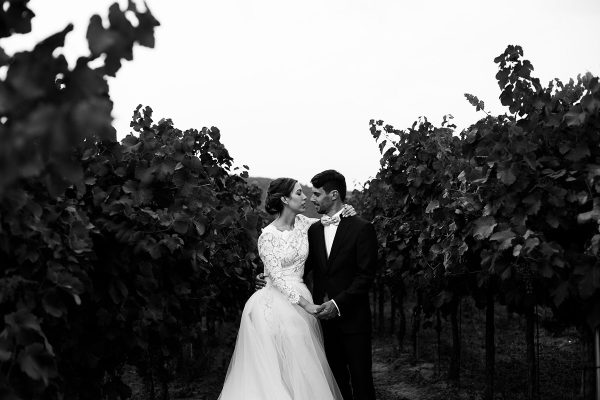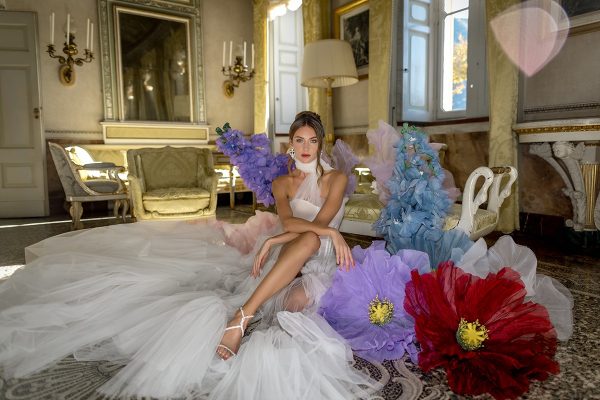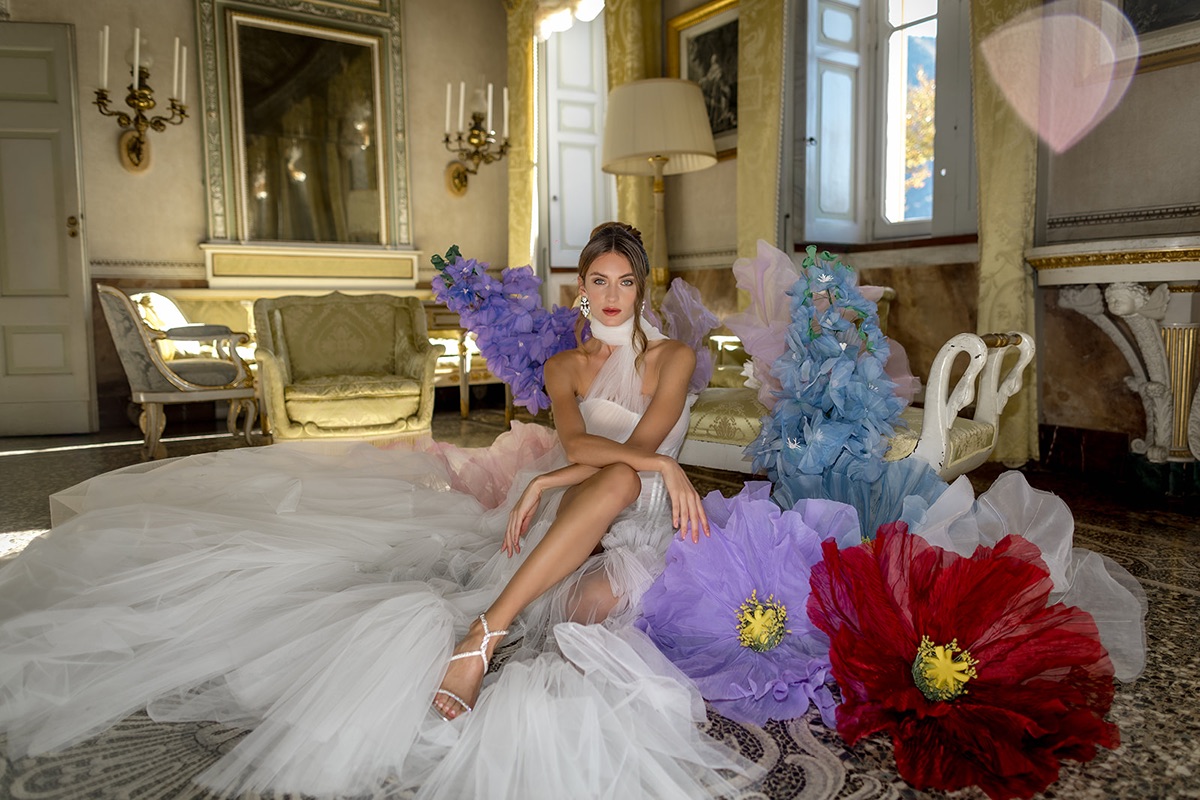
There is a version of wedding design that exists only on mood boards. A long table under a pergola, a hundred candles, a cloth falling to the floor, roses the colour of the stone behind them. It is beautiful, and it is also, in that form, an image rather than a plan.
The distance between the image and the evening is where planning lives.
Someone has to know whether the pergola can take the weight of what is hanging from it, whether the property permits open flame, whether the linen will survive a breeze off the water at eight in the evening, where the power for the lighting comes from, how a fourteen-metre table is carried down a flight of steps, and what happens to all of it if it rains.
None of that makes the design smaller. Done well, it is what makes the design possible. And in Italy in particular, where the most beautiful venues are also the most constrained, the relationship between the aesthetic and the practical is not a compromise to be managed. It is the actual craft.
Two Roles, One Decision
I have written separately about how a wedding planner and a wedding designer work together, because the distinction is genuinely useful and frequently misunderstood. In short: the designer is responsible for how the wedding looks and feels, the planner is responsible for how it happens.
What matters here is what occurs at the boundary between them.
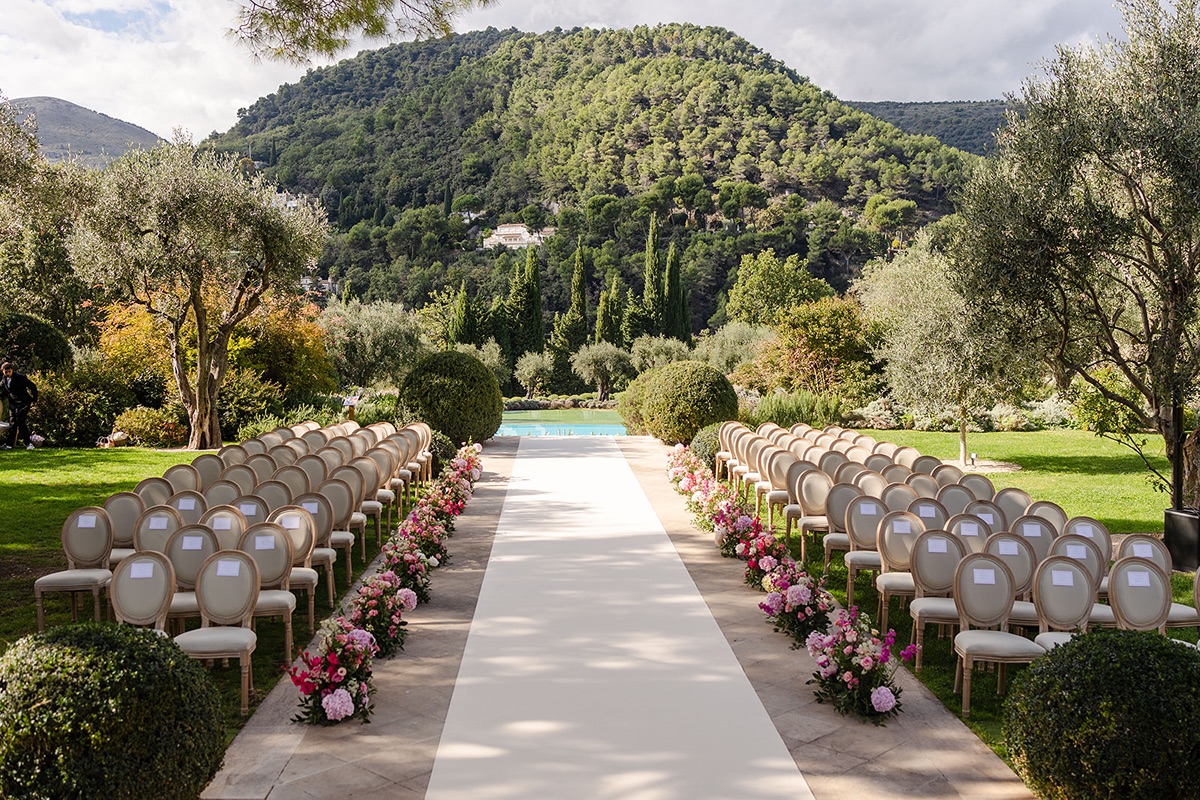
Almost every design decision is also a logistical decision. A ceremony facing the water rather than the villa is an aesthetic choice, and it is also a decision about where the sun will be at five o’clock, where the guests’ chairs go, where the sound system sits, and which direction the photographer is shooting into. A dinner in the lower garden rather than the upper terrace is a choice about atmosphere, and it is also a choice about how far the catering is from the kitchen, whether the ground is level enough for a table, and how eighty people get down there.
When those two conversations happen separately, the wedding acquires a series of small unresolved conflicts that surface on the day. When they happen together, from the beginning, the design gets better — because the constraints tend to produce the interesting decisions.
This is also why I work closely with wedding designers I trust, Marcella Molinari among them, rather than treating design as a service to be procured after the venue is booked. The design conversation and the planning conversation are the same conversation held from two angles.
What Italy Specifically Imposes
Several constraints appear in almost every Italian wedding I plan, and they are worth understanding before they arrive as bad news.
- The buildings are protected. Many of the most beautiful villas, cloisters and estates in Italy are under the protection of the Soprintendenza, the heritage authority. That protection is why the building still looks the way it does, and it also means real restrictions: nothing fixed to walls, nothing screwed into stone, nothing that leaves a mark, sometimes nothing structural at all without approval. Installations become free-standing, self-supporting and reversible. This is a design brief, not an obstacle, and designers who work here regularly are fluent in it.
- Open flame is often restricted. Candlelight is central to the aesthetic almost every couple wants, and it is also the thing most likely to be limited — by the property, by insurance, or by the fire authorities, particularly in dry months in Tuscany. Hurricane glass, enclosed lanterns and high-quality LED are not aesthetic defeats. Discovering the restriction two weeks before the wedding is.
- Power is the hidden constraint. Historic properties were wired long before anyone imagined a catering kitchen, a lighting rig and a band on the same circuit. What appears on a design board as “warm lighting in the trees” is, in practice, a load calculation, a distribution plan, cabling that has to be hidden, and frequently a generator that has to be delivered, positioned out of sight and silenced.
- The landscape is already the design. This is the constraint that is really a gift. A garden that falls to the water on Lake Como, or a cypress avenue on a Tuscan ridge, is doing more visual work than anything you can install in it. The most common design failure I see at Italian weddings is over-decoration — a scheme that competes with the setting rather than making room for it. The best designers here consistently do less, and place it more precisely.
- Nothing is close to anything. Suppliers, warehouses and workshops are often an hour or more from the venue, on roads that large vehicles cannot use. A design that requires four separate deliveries on the morning of the wedding requires four separate vehicles capable of reaching a farmhouse at the end of a strada bianca, arriving in the right order, with somewhere to park.
- August pauses. The resort towns are at full capacity, but the workshops, artisans, upholsterers and suppliers behind the design close for two or three weeks around Ferragosto. A bespoke element that needs a fabrication in mid-August needs to have been commissioned in June.
The Sequence That Works
The order in which decisions are taken determines how much of the original vision survives.
- The venue comes first, and it sets the palette. Not the other way around. Choosing a scheme and then looking for somewhere to put it produces a wedding that fights its setting. A green-and-white scheme in a stone courtyard in Tuscany and the same scheme in a lakeside garden are two different weddings, and both are better for having started from the place.
- The light comes second. Where the sun is at every hour of the day, in the specific month of the wedding, determines where the ceremony faces, when the aperitivo happens, when dinner is served and what the photographs look like. This single variable shapes more of the design than any other, and it is astonishing how often it is considered last.
- The technical plan comes before the decorative one. Power, sound, rain, access, kitchen distance and installation time. Establishing what is possible does not shrink the design. It redirects it towards the things that will actually be built.
- The wet-weather version is designed, not improvised. The alternative plan should be a wedding you would be genuinely happy with, designed with the same care as the first version, and confirmed early. It is the single most protective decision a couple can make about the aesthetic of the day, because a beautiful plan A and a panicked plan B is not a choice between two weddings, it is a choice between one wedding and a marquee.
- And the day itself is designed backwards from the light at the end. The photographs everyone wants — the ones with the low gold light, the candles beginning to matter, the lake going dark behind the table — happen in a window of about forty minutes. The timeline should be built to place people inside that window, rather than discovering it while everyone is still eating.
What Good Looks Like
The weddings I am proudest of do not photograph as elaborate. They photograph as inevitable — as though the day could not have taken any other shape in that place.
That quality is not the result of a larger budget or a bolder concept. It comes from a design that was made with full knowledge of the site, the light, the constraints and the movement of people, and from a plan that was built to deliver exactly that design rather than an approximation of it.
Aesthetics and planning are not two departments that have to negotiate. They are one process, and the wedding is what happens when they are held in the same hands.
If you are planning a wedding in Italy and would like the design and the plan to grow together from the first conversation, get in touch.