There is a distinction that many couples don’t fully understand until they are deep into the planning process — and sometimes not even then.
A wedding planner and a wedding designer are not the same role. They are complementary, and when they work well together, the result is something neither could achieve alone. But they bring different skills, different perspectives, and different responsibilities to a wedding. Understanding how they interact is one of the most useful things a couple planning a destination wedding in Italy can do.
What a Wedding Planner Does
A wedding planner is responsible for the architecture of the event — the structure that holds everything together and allows the day to unfold without visible effort.
This means managing vendors, timelines, budgets, contracts, and logistics. It means anticipating problems before they arise and solving them quietly when they do. It means knowing which florist works best with which caterer, which venues have hidden constraints, and how to coordinate a group of sixty guests arriving from four different countries without anyone feeling lost.
The planner’s work is largely invisible on the day itself. When it’s done well, nothing appears to have been organised at all — everything simply happens, as if the day had always known what it was supposed to be.
What a Wedding Designer Does
A wedding designer operates in a different register. Their work is visible — it is, in fact, the point.
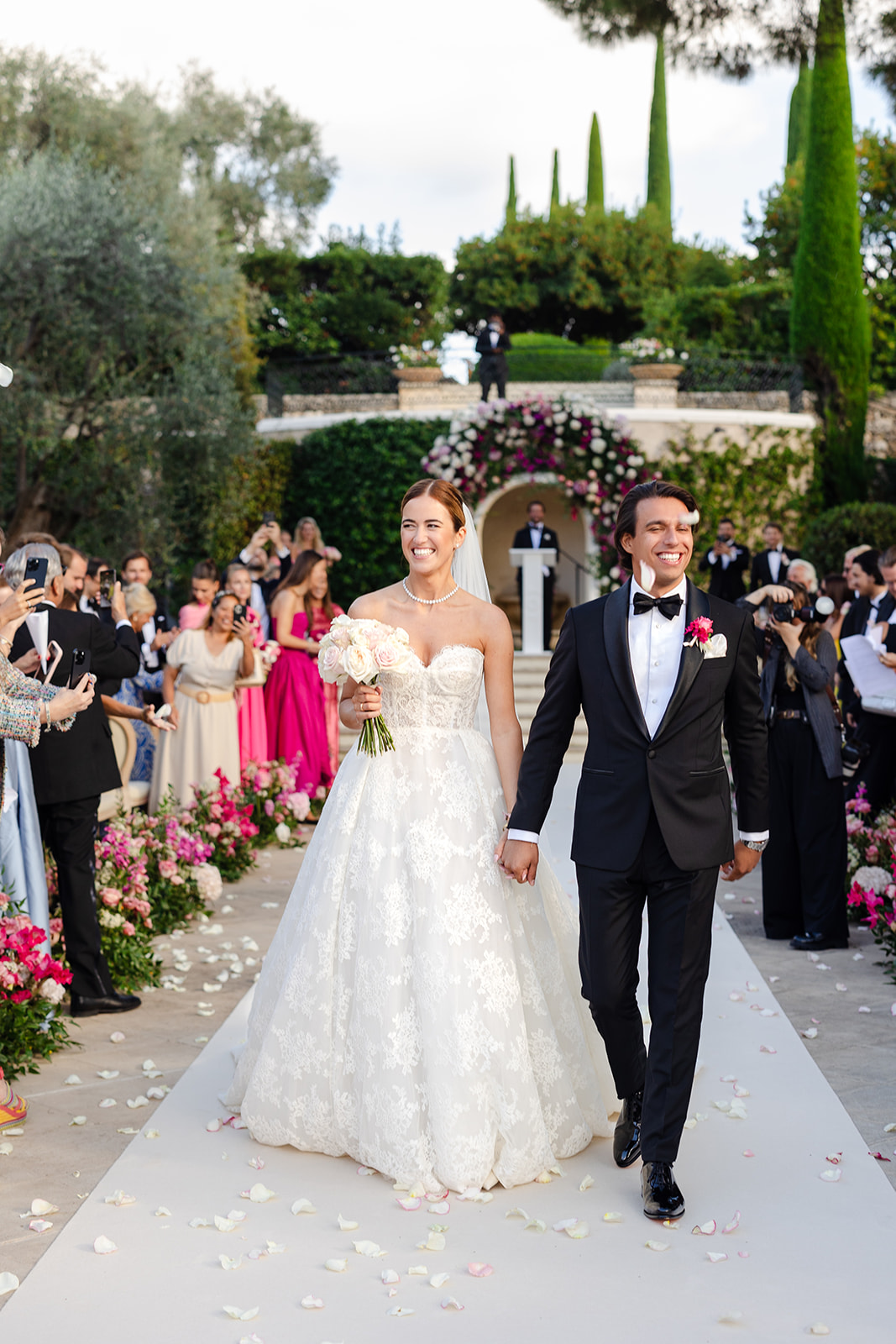
The designer is responsible for the visual and sensory identity of the wedding: the way the ceremony space feels when guests walk in, the relationship between the floral arrangements and the tableware, the quality of light during dinner, the way colour and texture and proportion combine to create an atmosphere that is unmistakably particular to this couple, this place, this day.
Good wedding design is not decoration. It is not about filling a space with beautiful objects. It is about creating a coherent visual narrative — one that reflects the couple’s personality and amplifies the emotional character of the celebration without ever feeling forced or generic.
How the Two Roles Work Together
The relationship between planner and designer is one of the most important creative partnerships in a wedding. It works best, though, when neither person stays strictly inside their own role.
In my work, I collaborate closely with Marcella Molinari, a wedding designer whose approach I have come to know and trust deeply. What makes this collaboration effective isn’t that we occupy two separate territories — it’s that we each have real fluency in the other’s discipline. My own background gives me an instinct for design as well as logistics; Marcella, in turn, has planned enough weddings to think in timelines and constraints as naturally as she thinks in light and texture. That overlap is what lets us move quickly and finish each other’s thinking, rather than simply handing a project back and forth.
From the earliest conversations with a couple, we work in parallel. While I’m assessing venues for their logistical viability — access, capacity, catering facilities, guest flow — I’m already anticipating how Marcella will read the same space: how light moves through it at different times of day, what the architecture offers and what it constrains, how the natural landscape can be incorporated rather than competed with. She, just as naturally, is weighing whether the layout will actually hold together on the day. These aren’t two conversations translated between roles. They’re one conversation, held by two people who understand both sides of it.
As the planning progresses, every practical decision has a design dimension, and every design decision has a practical one — and because we each recognise both dimensions, neither gets treated as someone else’s problem. The choice of tables affects the flow of the room. The floral scheme affects the timing of setup. The lighting design affects the running order of the evening. A planner and designer confined to separate lanes will find these decisions pulling in different directions, however much they respect each other. Ours reinforce each other instead.
What This Means for Couples
For a couple planning a destination wedding in Italy, working with a planner and designer who already have an established working relationship is a significant advantage.
It means fewer briefings, fewer misunderstandings, and fewer moments where the logistical reality of the day conflicts with the aesthetic vision. It means that the couple can articulate their ideas once — to both of us together — and trust that those ideas will be translated coherently across every element of the wedding.
It also means that the couple’s experience of the planning process itself is more streamlined. Rather than managing two separate creative relationships and mediating between them, they have a single point of coordination — one conversation, one shared vision, one team working toward the same result.
A Final Note on Trust
The most important thing a couple can bring to the planner-designer relationship is trust — not blind trust, but the kind that comes from understanding what each person does and why.
Protecting the day and making it beautiful were never really two separate jobs — they’re two instincts that need to live in the same room. When both of us bring both to the table, and do it with skill and genuine care, the wedding that emerges is something the couple could not have imagined on their own — which is, in the end, exactly what it should be.
If you’d like to understand more about how I work and what a collaboration with Marcella and me might look like for your wedding, I’d be happy to talk.