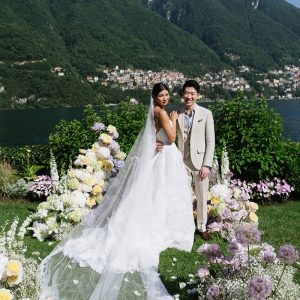
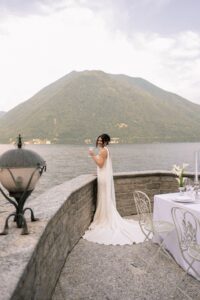
There is a particular anxiety that surfaces around the sixth month of planning, and it is almost always phrased the same way. We want it to feel Italian. We just don’t want it to feel like a theme.
It is a good instinct, and the distinction is real. There is a version of an Italian wedding that has lemons on every table, a Vespa parked at the entrance, red and white checked linen, a tenor singing Nessun Dorma between courses and a sign in cursive reading La Dolce Vita. Every element of it is technically Italian. Together they produce something that no Italian would recognise as their own.
And there is another version, with no visible references at all, that feels unmistakably of this country to everyone present.
The difference between them is not taste. It is understanding what Italy actually does, as opposed to what Italy looks like in pictures of itself.
The Costume and the Behaviour
Here is the underlying principle, and everything else in this article follows from it.
Italian identity, at a wedding, is expressed almost entirely through behaviour — how people eat, how long they sit, how they are welcomed, what happens at four in the afternoon — and almost not at all through iconography.
Iconography is what a place looks like to someone who does not live there. Behaviour is what a place is like to someone who does.
When a wedding leans on iconography, it reads as decoration applied to a country. When it leans on behaviour, guests come away saying it felt Italian without being able to point to a single thing that made it so. That inability to point at anything is the mark of having got it right.
The lemons are not the problem in themselves. Lemons are genuinely of the Amalfi Coast and belong on a table there. The problem is a lemon in Tuscany because a search engine suggested it.
The Things That Actually Make It Feel Italian
- Food that comes from where you are standing. This is the single most powerful choice available, and it costs nothing extra. In Tuscany, that means the pecorino from the next valley, the beef from the Val di Chiana, the estate’s own oil poured at the table. On Lake Como, it means lavarello from the water in front of you, missoltini, a risotto, pizzoccheri from the valleys to the north. An international menu served in a beautiful Italian setting is a missed opportunity that guests can taste.
- A meal that is allowed to take its time. An Italian reception dinner runs two and a half to three hours because that is how long the sequence takes at the pace it is meant to be eaten. Compressing it to fit a timeline is the most common way a wedding here stops feeling Italian. The length is not an inconvenience to be managed, it is the content.
- A proper aperitivo. Not a holding pen before dinner. An hour with real intent — something well made in the glass, food worth eating, people standing and moving between groups. It is the most Italian hour of the day and the one most often treated as a gap.
- Wine that has a place attached to it. Wine chosen because it comes from the hill you can see, and someone who can say so in one sentence when it is poured. Guests remember being told where something came from.
- Hospitality that arrives before it is requested. The Italian instinct with a guest is to feed them immediately, to ask whether they are comfortable, and to be faintly troubled if they are not. Translated into a wedding, that means water and shade before anyone is hot, something to eat as soon as they arrive, a chair for the guest who needs one before they ask. It is the deepest form of Italian identity available at a wedding and it has no visual component at all.
- Sound rather than performance. Live music that people talk over. A trio at the aperitivo, a guitarist during dinner, an accordion at the point in the evening when it becomes funny rather than tasteful. What does not work is the set-piece: the operatic solo delivered to a seated audience, which is a concert, not a wedding.
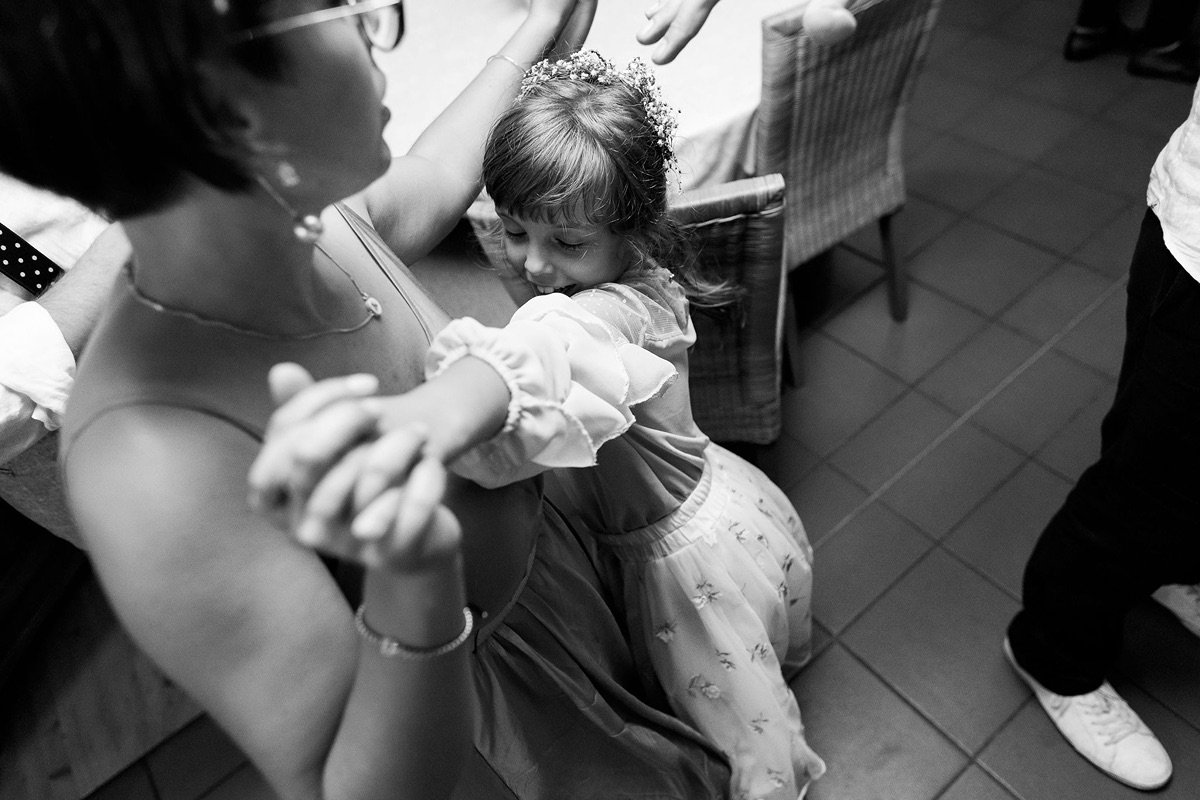
- Children present. Italian celebrations include children, who run around, fall asleep on chairs and are handed between relatives. A wedding that makes room for that reads as a family occasion rather than a produced event.
- The afternoon respected. Between two and five in the summer, the country slows down. A wedding scheduled straight through that window in July is fighting the place. One that puts the ceremony at six is agreeing with it.
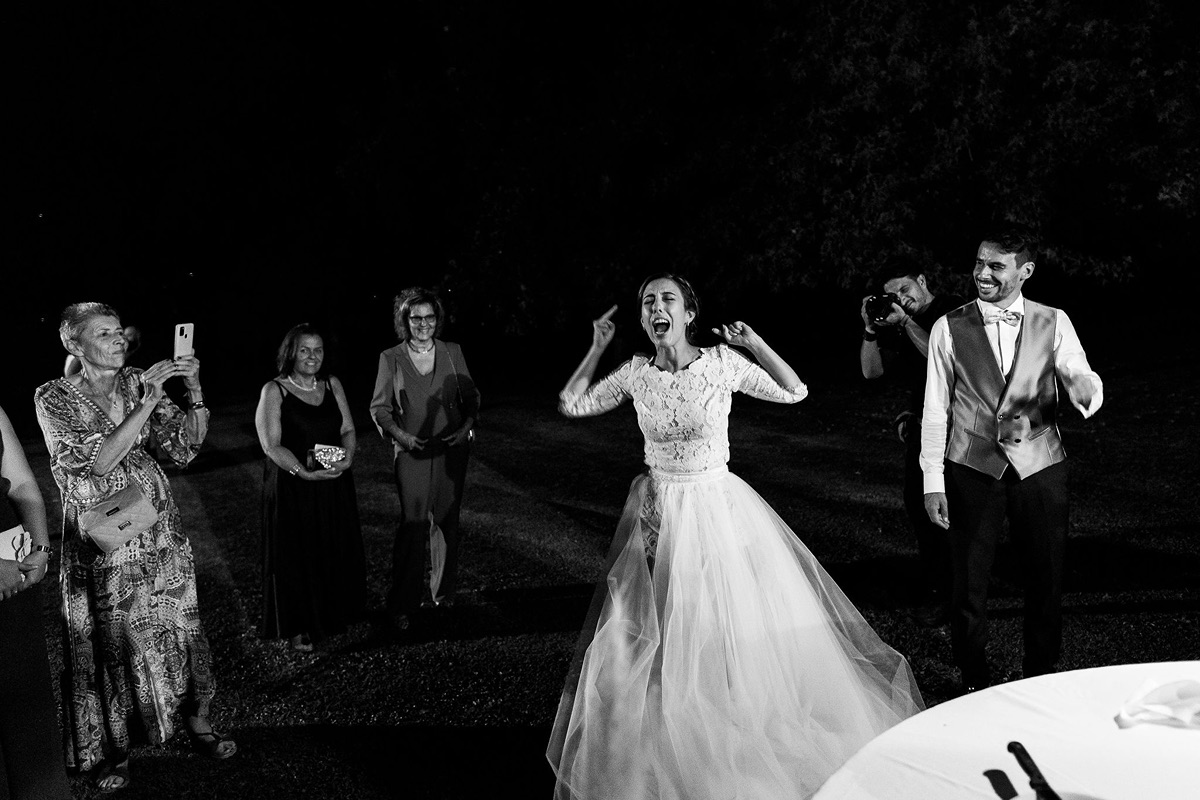
- An evening that drifts rather than ends. After dinner, Italians move. To the terrace, to the garden, to a table outside with the last of the wine. Designing a space for that — lit, comfortable, slightly away from the music — produces the part of the night people describe afterwards.
The Things That Read as Touristic
Said plainly, because it is more useful than being diplomatic.
- References imported from a different region. Lemons in Chianti. Amalfi ceramics on Lake Como. Sunflowers in September. Each is authentic somewhere and out of place everywhere else.
- Red and white checked anything. It is not the tablecloth of an Italian home. It is the tablecloth of a restaurant abroad advertising that it serves Italian food.
- Italian words used as decoration. Amore, La Dolce Vita, Ti Amo printed on signage and napkins. In Italian these are ordinary words, and seeing them displayed produces roughly the effect that a sign reading “LOVE” in English would produce at a wedding in Ohio.
- The Vespa, the Fiat 500 and the Ape. All three are real, all three are now shorthand, and all three signal a wedding designed from a search engine’s idea of Italy.
- The performance of Italian-ness. A tenor, a pizza chef in costume, a gondolier in a place with no canals. These are entertainment products, and guests recognise them as such.
- Over-decoration. The most common design failure at Italian weddings, and the one that most reliably makes a beautiful place look staged. A terrace above the lake or a courtyard in a borgo is already doing the work. Adding to it competes with it.
The Test I Use
When there is doubt about an element, I ask one question: would this be here if the wedding were not happening?
The olive trees would be. The stone would be. The oil, the wine, the long meal, the view, the light at eight in the evening, the way the staff treat the guests — all of that exists whether or not there is a wedding in it.
The Vespa would not.
That is not a rule that eliminates decoration, and it should not. Flowers, linen, candles and design are essential, and I work closely with designers precisely because that layer matters enormously. It is a rule about reference: the wedding should sit inside the place rather than comment on it.
The Version That Works
The most authentically Italian weddings I have planned had almost no identifiable Italian references in them.
They had a long meal that nobody hurried. Wine from the estate. An aperitivo that ran over because the conversation was good. Guests who were fed and shaded before they thought to ask. Children asleep at the end of the table by eleven. A view that had been left alone. And a moment after dinner when everyone drifted outside because the light had gone and the candles had started to matter.
Nobody photographed a single object that said Italy. Everybody came home saying it was the most Italian thing they had ever been part of.
That is the distinction, and it is available to any couple willing to trust the place they have chosen.
If that is the wedding you would like to have in Italy, get in touch.