Many of the couples I work with live on another continent. They see their venue in person only a handful of times before the wedding, sometimes once. The rest of the planning happens across a screen, a time difference and a great deal of trust, between two people far away and a team of people who live on the lake.
That arrangement sounds fragile. In practice, it works beautifully, provided the method is built around the distance rather than in spite of it. I have written elsewhere about how the country itself works, from the seasons to the roads. This piece is about something different: how a wedding in Italy is actually put together when the couple is half a day away by plane, and what that asks of everyone involved.
Distance Changes the Method, Not the Result
A couple planning a wedding in their own city makes dozens of small decisions in person. They drop by the florist, taste the cake on a Saturday, walk the room once more before signing. Each decision is cheap, so they can afford to make it twice.
From abroad, every decision costs more. A call has to be scheduled, a sample has to be shipped, a visit has to be planned around flights and holidays. The answer is to decide fewer things, in the right order, with better information each time. Fewer decisions, made well, is the whole discipline of planning from a distance. Couples who try to replicate the hometown rhythm, deciding a little every week, tend to exhaust themselves and their suppliers. Couples who accept a different rhythm find the process calmer than they expected.
The Clock Is Part of the Planning
My working day on Lake Como begins in Singapore’s afternoon and ends in California’s morning. In summer, Singapore is six hours ahead of Italy, New York six hours behind, Los Angeles nine. A couple in one of those cities and a florist in Como share only a few useful hours a day, and those hours are rarely the ones anyone would choose.
This is less of an obstacle than it seems, as long as it is treated as a design constraint. In practice, that means a few habits:
- Calls are few and prepared. Every video call has an agenda sent in advance and a written summary afterwards, so nothing depends on anyone’s memory of a conversation held at eleven at night.
- Decisions live in writing. One shared document holds what has been decided, what is pending and who is waiting for whom. It becomes the real map of the wedding.
- There is one point of contact. The couple talks to me, and I talk to the venue, the caterer, the florist and the musicians. Twelve suppliers writing directly to a couple in another time zone is how details get lost between inboxes.
- The time difference becomes useful. A question sent from Singapore in the evening reaches me in the afternoon, gets answered by the supplier before dinner, and is waiting in the couple’s inbox when they wake. Handled well, the distance works overnight while everyone sleeps.
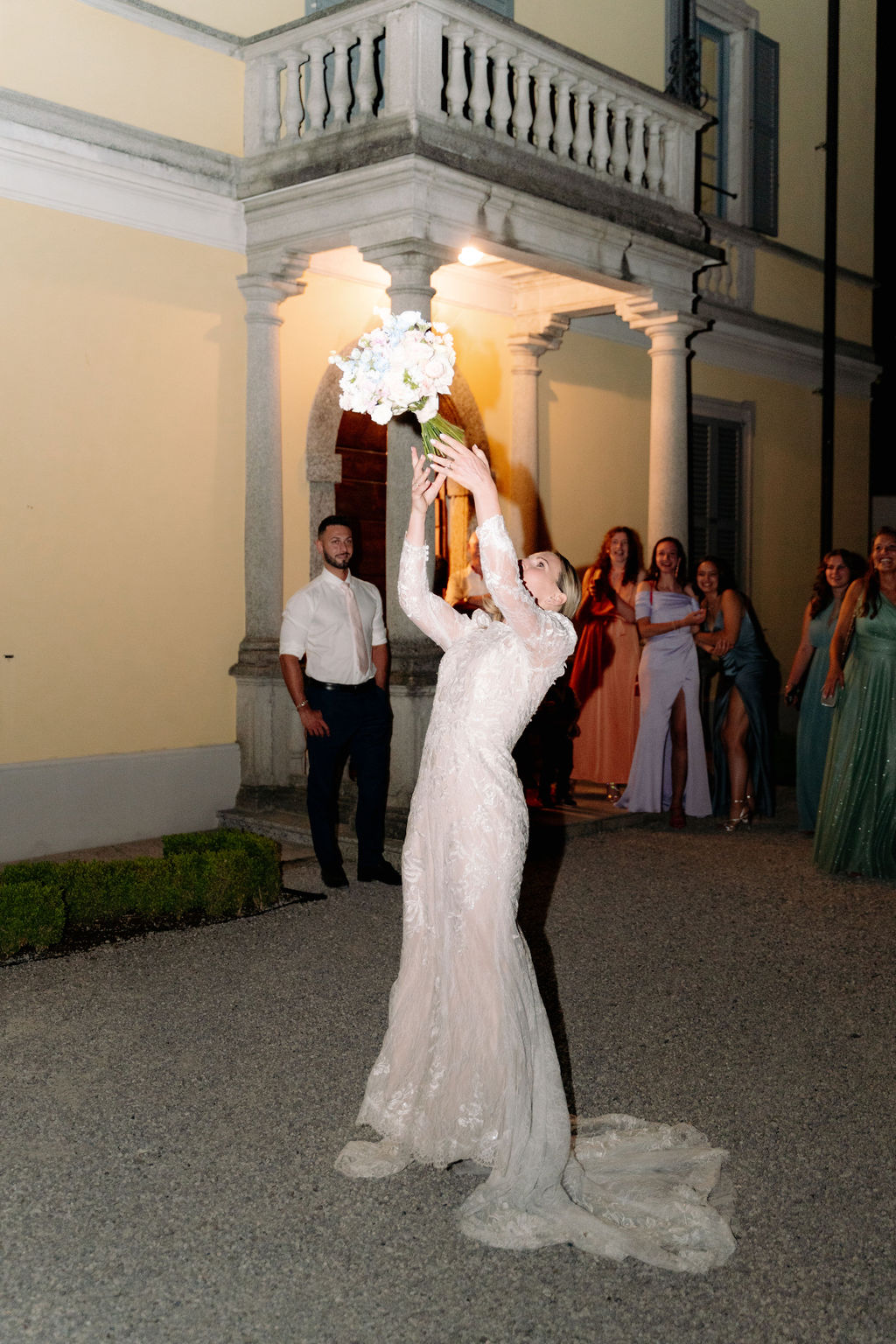
Choosing a Venue You Have Not Seen
The venue is the first real decision, and the one couples worry about most when they cannot walk through it.
A good video walkthrough shows a great deal: the rooms, the terraces, the view from the ceremony spot, the route guests will take from the dock or the car park. What it cannot show is just as important. It does not tell you how the light falls at the hour of your ceremony, how loud the road below the garden is on a weekday, how long it really takes to reach the hotels where your guests will sleep, or how the space feels with sixty people in it rather than none. That part of the judgment has to come from someone who has stood there, at that hour, more than once.
If there is one trip to make before the wedding, it is the site visit, and its timing matters. The most useful visit happens in the same season as the wedding, ideally close to the same time of day, once the shortlist has been narrowed to two or three places. A single well-planned trip, with the venues, the caterer and a few key suppliers lined up across two or three days, does more than several improvised ones. Some couples cannot travel at all before the wedding week. It is possible to plan without a site visit, but it shifts more of the judgment onto the planner, and couples should know that going in.
What a Screen Can Decide, and What It Cannot
Much more can be designed remotely than couples expect. Palettes, floor plans, stationery, the structure of the menu, the order of the evening: all of these can be built through mood boards, layouts and proofs, revised over a few calls and signed off with confidence.
Physical samples close most of the remaining gap. Paper stock, ribbon, fabric swatches and printed proofs can travel to Singapore or Chicago in a few days, and seeing them in hand prevents the most common disappointment of remote planning, a color that looked right on a screen and reads differently in daylight.
A few things resist the screen entirely:
- The tasting. Food has to be eaten in the place where it will be cooked. It belongs either on the site-visit trip or in the days just before the wedding.
- Flowers in season. Florists can show past work and propose varieties, but the real blooms depend on what the season delivers that year, so the final choice keeps some flexibility until the last weeks.
- Hair and makeup. The trial happens in Italy, in the days before, with the actual products, the actual humidity and the actual dress.
Knowing in advance which decisions belong to which category is what keeps the process calm. Nobody spends six months worrying about a tasting that was always going to happen in the last week.
Bringing Home With You
A wedding planned from abroad is also a wedding that travels. Couples bring traditions, objects and expectations from home, and those need as much planning as the venue.
Joanna and Terrence came from Singapore to marry at Villa Regina Teodolinda in late May, with twenty-five of their closest family and friends. The design was built around spring, in butter yellow, lilac, white and green, with calligraphed silk ribbons and hand-painted wine bottles. At the heart of the day was a traditional tea ceremony, a piece of their heritage carried halfway across the world and set on the shore of Lake Como.
A ritual like that raises practical questions that are easy to overlook from a distance. What needs to travel in the couple’s luggage, and what can be found or made in Italy. Who leads it, and in which language. Where it sits in the day, and how the timing of everything else bends around it. How the venue, the photographer and the caterer understand what it is and why it matters. Each of these is simple to solve once it is on the list, and stressful when it surfaces in the final week.
The Calendar Works Backward From Your Arrival
The planning calendar for a couple abroad is organized around one fixed point: the day they land.
The early months belong to the large decisions, made in the right order. The date and the venue first, then the core team, caterer, photographer, florist, and with them the guest accommodation, since the best rooms near the best venues disappear early. This is also when the legal side of an Italian marriage gets decided, since it affects the whole timeline. Many international couples marry legally at home and hold a symbolic ceremony in Italy, which removes most of the paperwork from the equation.
The middle months are for design, almost entirely remote: proposals, revisions, samples, approvals. It is the longest phase and, handled well, the most enjoyable one for the couple, because it is where the wedding starts to look like itself.
The final two months turn toward the guests: travel information, transfers, the schedule of the weekend, the small decisions about who sits where and who arrives when. Then the couple boards a plane, and the planning changes nature completely.
The Week You Arrive
I always suggest arriving several days before the wedding, ideally a week. Jet lag from Asia or the West Coast takes time to wear off, and the last appointments, the tasting if it has not yet happened, the hair and makeup trial, the final walkthrough of the venue, need a couple who is awake.
That week is also when months of remote work become physical. The couple sees the tables set for the first time, meets in person the people they have only known as names in an email thread, and discovers that the lake looks the way it did in the video, only better. Guests begin to arrive, and the journey from the airport to the lake, which everyone has read about in the travel information, becomes real. By the time the wedding day comes, the distance that shaped the entire planning process has quietly disappeared.
What Distance Asks of You
Planning from abroad asks for two things above all: clarity about what matters most to you, and the willingness to let someone on the ground carry the rest. Couples who give both tend to arrive in Italy relaxed, because every decision that needed them was made in time and every decision that did not was handled without them.
The venue you saw once, or perhaps never, will be exactly where it should be. If you are planning from another continent and would like to understand how that process could look for your wedding, I would be glad to walk you through it.