On Lake Como, the water is the main road. The villas were built to be seen from it, the villages face it, and for centuries the most natural way to reach a wedding on these shores was by boat. It still is. For guests who have flown in from another continent, the first time they step off a boat onto a villa’s landing stage is often the moment the trip starts to feel real.
I have written separately about what guests can do on the lake in the days before the wedding, including private tours of the villas and villages. This piece looks at the boat from another angle: as part of the wedding itself, something that shapes the program of the weekend and needs to be planned with the same care as the dinner or the ceremony.
Three Roles a Boat Can Play
In a Lake Como wedding weekend, boats tend to do one of three jobs, and it helps to decide early which ones you want.
- The tour. A small group of guests explores the lake on their own schedule, usually on a free afternoon. It is the simplest to arrange and the least connected to the wedding program.
- The event. The whole group, or a large part of it, is on the water together at a set time, most often for an aperitivo at sunset. Here the boat becomes a venue, with everything that implies.
- The transfer. The boat carries the couple or the guests from one place to another as part of the day: to the ceremony, from the ceremony to the reception, back to the hotels at night.
Each role asks for different boats, different timing and a different plan B. Couples who want all three are not unusual, and it works well, as long as they are planned as three separate things.
The Sunset Cruise as Part of the Weekend
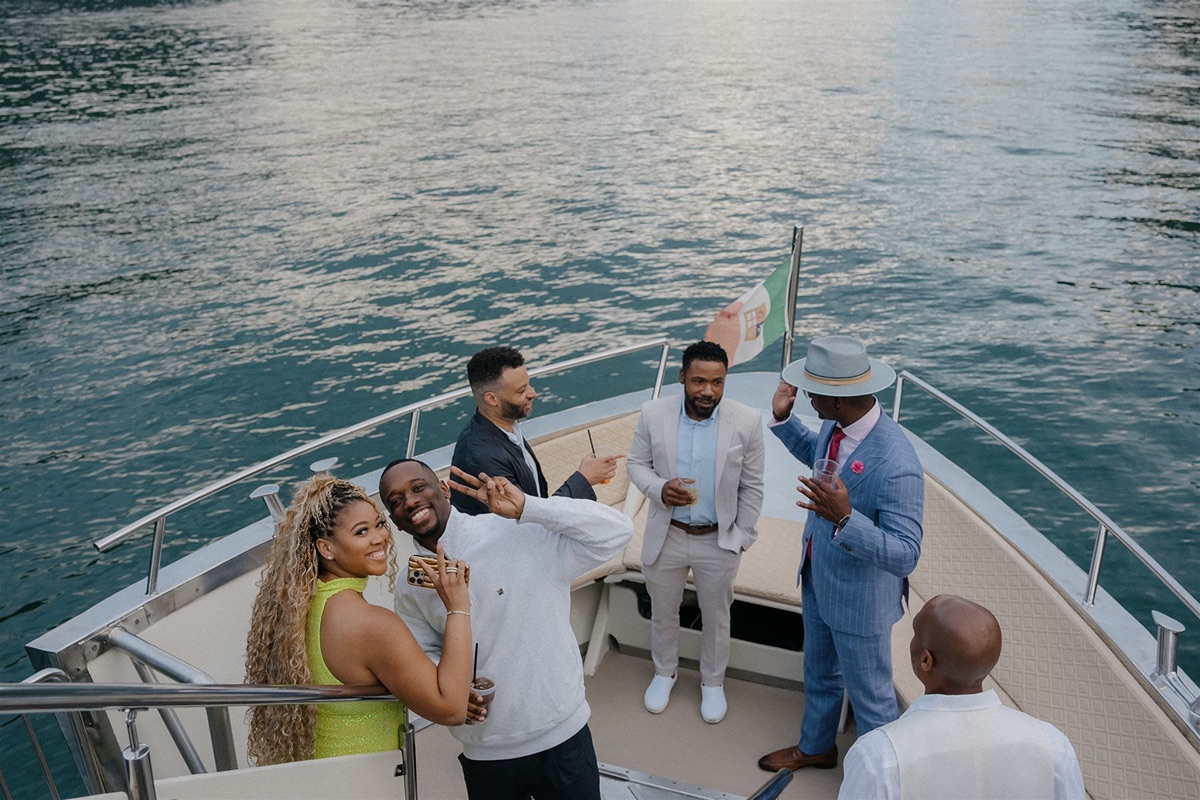
Of all the ways to use the lake, a sunset cruise for the whole group is the one that most reliably turns a collection of guests into a single party. People who met at the airport an hour earlier end up sharing a glass on deck, the light goes gold on the mountains, and nobody needs to be told to look up from their phone.
It works particularly well as the welcome evening, or as a gentler alternative to it: a cruise before a relaxed dinner, rather than a formal dinner on its own. It also suits the day after the wedding, when guests are tired, happy and ready for something that asks nothing of them.
A few things make the difference between a pleasant boat trip and a real event:
- The timing follows the sun, not the clock. Sunset on the lake moves by more than an hour between late spring and early autumn, and the mountains hide the sun earlier than the official time suggests. The departure is set from the actual date, with enough margin for boarding.
- The route is short. The best cruises do not try to see the whole lake. They choose one stretch, often around the central basin, and slow down where the view is best.
- The bar is simple and well made. A good spritz or a glass of Franciacorta, a few proper bites, served properly. Ambitious catering on a moving boat rarely improves anything.
- Music stays light. A single musician, or nothing at all. The lake makes its own atmosphere.
Group Size Changes Everything
This is the question that decides most of the logistics, and the one couples rarely think about until it is asked.
Most private motorboats and classic wooden boats on the lake carry a small group, typically somewhere between a handful of people and around a dozen. For twenty-five guests, that means two or three boats. For eighty, it means a small fleet, travelling together, with every boarding and landing multiplied accordingly.
There are two ways to handle a large group. The first is a convoy of private boats, which feels intimate and lets the group split naturally, but needs careful coordination at the docks and a clear plan for who travels with whom. The second is to charter a larger vessel. The public lake navigation company hires out its ships for private events, from groups of around eighty upward, with its own catering or an outside caterer. One boat, one boarding, everyone together. It feels less exclusive than a fleet of wooden boats, and much simpler to run.
The right choice depends on the group, and what matters most is deciding it early, because the best boats and the best captains are booked for the high-season weekends long before the guest list is final.
Arriving by Water
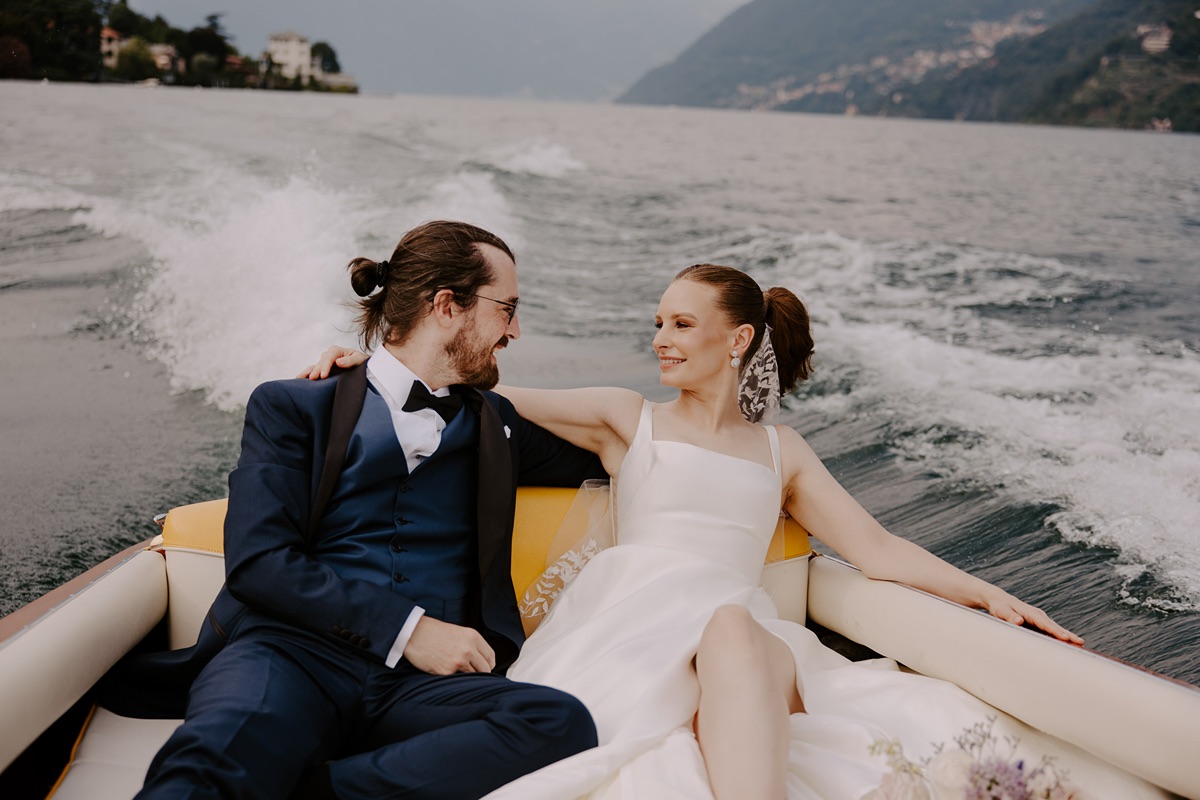
Arriving at the ceremony by boat is one of the great images of a Lake Como wedding, and it is worth doing well, which means thinking about it practically as well as visually.
- The venue needs a landing stage, and not every beautiful villa has one. Where it exists, check how many boats it can take at once and how guests walk from the dock to the ceremony, especially on stone steps in formal shoes.
- Wind and spray are part of the ride. Hair, veils and silk do not always enjoy a crossing. A short trip with a covered boat, or a boat for the bride and a separate one for the guests, often solves it.
- The timing has to be exact. A boat arriving early waits off the shore in full view, and one arriving late holds up the ceremony. The captain and the planner should be in direct contact throughout.
- There is always a road alternative. If the weather turns, the plan switches to cars, and that switch is decided at a fixed time, not at the last minute.
Boat transfers work best as part of the rest of the transport plan, not as a separate idea added later.
The Wind, the Weather and the Afternoon
The lake has its own weather, and boats feel it before anyone else.
On many summer days, the water is calm in the morning and a southerly breeze, which locals call the Breva, rises in the early afternoon and can make the central lake noticeably choppier. It usually eases toward evening, which is one more reason sunset is the natural time for a cruise. Summer thunderstorms can also build quickly over the mountains and pass just as quickly.
So boat moments are best planned with a little flexibility: a cruise that can shift by an hour, a transfer that can move to the road, a captain who knows the lake and whose judgment on the day is trusted.
Getting Everyone Home
The most overlooked part of using boats at a wedding is the end of the evening.
The public ferries are useful during the day, but their last departures come earlier than most guests expect, and they follow a fixed timetable that does not wait for a party to finish. For guests staying in villages across the water, the return trip has to be organized: private boats or water taxis booked in advance for set times, with someone checking that every group has a seat.
This is where working with a local partner who manages boats every day makes a real difference. They know which captains work late, which docks are lit at midnight and how many trips the night will need, and they make sure the last guests are home as safely as the first.
A Final Thought
Guests remember the lake from the water. The villa they saw from the deck, the light at the end of the cruise, the boat that took them home under the stars. Planned well, the boat becomes the thread that ties the weekend together.
If you would like to think through how the lake could become part of your own wedding weekend, I would be happy to plan it with you.